
Service
KSEB & Inspectorate Documentation
KSEB approval documentation and Electrical Inspectorate paperwork handled end to end in Keralam.
What this covers
A building can be wired perfectly and still sit dark, because the paperwork is not done. Getting power in Kerala means a load application to KSEB, a completion certificate and test report signed by a licence holder, and — above a certain load or voltage — approval from the Kerala Electrical Inspectorate before the installation may be energised. This service is that entire paper chain, handled for you: the application, the drawings, the test reports, the Inspectorate submission, and the follow-up until the meter is fixed and the supply is live.
Most owners come to us at one of two moments. Either the building is finished and nobody has started the file, or the file was started, was rejected, and now nobody knows what is missing. Both are recoverable.
What's included
- Load sanction application to KSEB — connected load and maximum demand worked out appliance by appliance with diversity applied, the correct tariff category identified (LT-1 domestic, LT-4/LT-7 commercial, LT-5 industrial, HT-1 for high tension), and the application filed at the correct KSEB Section or Electrical Division office with the ownership, tax receipt, and building permit documents attached.
- Test report and completion certificate — the statutory certificate that only a Kerala Electrical Licensing Board approved contractor can sign. It records insulation resistance of every circuit, earth electrode resistance, earth continuity, polarity and phase sequence, and the protective device schedule. Without a valid signed completion certificate, KSEB will not release the connection, however good the wiring is.
- Electrical Inspectorate submission (Form A / drawing approval) — for installations above the notified load threshold, medium and high voltage installations, and installations under HT supply, the Chief Electrical Inspectorate's approval is required before energisation under the Central Electricity Authority (Measures relating to Safety and Electric Supply) Regulations. We prepare and submit the application, drawings, and test reports and follow it through the office.
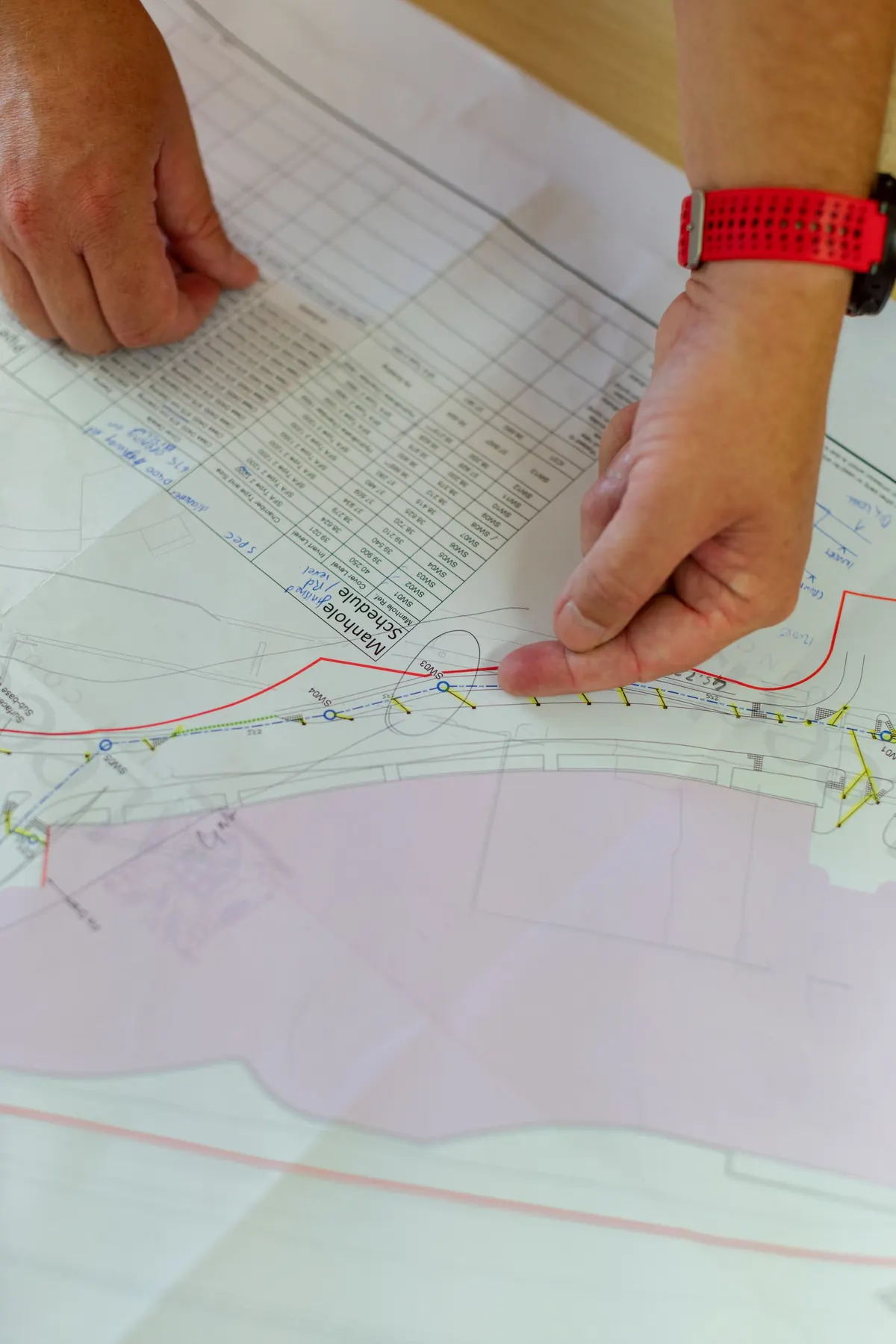
- Single line diagram and installation drawings to Inspectorate format — SLD from the KSEB supply point through the transformer, HT panel, main LT panel, and distribution boards; earthing layout with pit locations; panel GA and schematic; cable schedule with sizes and lengths. Drawings are the most common reason a file is rejected, and the most common thing an owner does not have.
- Earthing test records — earth resistance measured at each pit with a properly calibrated tester and recorded, body and neutral earths kept separate, values within the limits the Inspectorate expects for the installation type. Where a pit fails, we tell you why and remediate rather than record a convenient number.
- Transformer, HT, and DG documentation — for sites with their own transformer or DG set: transformer and DG test certificates, relay settings, HT panel schematics, oil test reports where applicable, and the safety clearances and fencing details the Inspectorate will look for.
- Departmental liaison and follow-up — sitting with the KSEB Assistant Engineer or Assistant Executive Engineer, answering Inspectorate queries, attending the site inspection, and closing out shortfalls. This is the part that consumes the owner's weeks, and it is the part we take off you.
- Meter installation and energisation follow-through — deposit payment, agreement execution, service line work, meter fixing, and the first supply. The file stays open on our side until your supply is actually on.
Who this is for
- Resort and homestay owners — sanctioned load, DG registration, and Inspectorate approval, usually across multiple blocks with one supply point. Also owners converting a residential-tariff building into a commercial one, which is a tariff change KSEB will notice.
- Hospital administrators — high scrutiny, essential-load segregation, DG and UPS documentation, and often an existing installation whose paperwork was never properly closed.
- Factory and industrial owners — LT-5 or HT connections, load enhancement, transformer approval, and the power factor and metering conditions that come with an HT tariff.
- Mosque and church committees — buildings raised over years by volunteers with no single file, now needing a proper sanctioned connection the committee can account for.
- Builders and apartment developers — bulk supply and individual metering, per-unit completion certificates, and Inspectorate approval before handover to buyers.
- Homeowners — new connection, load enhancement for AC or an induction kitchen, rooftop solar interfacing, and name transfer or ownership change on an existing consumer number.
How it works
- Document audit and load assessment. We visit the site, inspect the installation as built, and list what exists and what is missing: building permit, ownership document, tax receipt, existing consumer number, previous sanction letter, earlier drawings. Then we calculate the connected load and maximum demand honestly, and tell you which tariff category you fall into and roughly what the deposit and charges will be in rupees. If there is a gap between what is wired and what can be certified, you hear it here, at the start, not after a rejection.
- Preparation of the technical file. Single line diagram, earthing layout, panel schematics, cable schedule, and the load schedule are drawn to the format the department expects. Testing is carried out on site — insulation resistance, earth resistance at each pit, continuity, polarity, phase sequence — and the results are recorded into the test report. The completion certificate is prepared and signed under our KLB licence. If a test fails, we fix the installation first. We do not sign a certificate for work that will not hold up.
- Submission and departmental follow-up. The load application goes to the KSEB Section or Division office; where required, the Inspectorate application and drawings go to the Electrical Inspectorate. We attend the site inspection, answer technical queries, and close out any shortfalls raised. Queries come back — that is normal, not a failure. What matters is that someone is there to answer them within days instead of the file sitting untouched for a month.
- Approval, energisation, and handover. Once approval is granted and the deposit and agreement are done, we follow the service connection and meter fixing through to supply. You are handed the complete file: sanction letter, approved drawings, test report, completion certificate, and Inspectorate approval. Keep it — you will need it for load enhancement, for a solar application, for the next inspection, and for the sale of the building.
Common questions
How do I get a new KSEB connection for a commercial building in Kerala?
You apply for load sanction at the KSEB Section or Electrical Division office covering your site, with your ownership document, building permit, and tax receipt, and a test report and completion certificate signed by a Kerala Electrical Licensing Board approved contractor. For loads above the notified threshold and for medium and high voltage installations, the Electrical Inspectorate must approve the installation before it can be energised. Then the deposit is paid, the agreement executed, the service line drawn, and the meter fixed. We handle the whole sequence — the application, the certificate, the Inspectorate file, and the follow-up.
Why was my KSEB application rejected?
Most commonly: the drawings are missing or do not match what is actually built, the earthing does not test out, the load declared does not match the connected load, the completion certificate is not from a currently valid licence holder, or the tariff category applied for is wrong for how the building is used. Bring us the rejection remark and the file — the fix is usually specific and identifiable, not a mystery, and it rarely means starting over.
Do I need Electrical Inspectorate approval, or is KSEB enough?
It depends on your load and voltage. Small domestic connections are handled through KSEB alone. Installations above the notified load threshold, all medium and high voltage installations, and anything on HT supply require the Electrical Inspectorate to approve the installation before energisation under the CEA safety regulations. Resorts, hospitals, factories, and larger commercial buildings very often fall into this category. Tell us your connected load and supply type and we will tell you clearly which route applies.
What is a completion certificate and who can sign it?
It is the statutory declaration that the installation has been executed and tested to the required standards, and it can only be signed by a contractor holding a valid licence from the Kerala Electrical Licensing Board. It carries the test results — insulation resistance, earth resistance, continuity, polarity — and it is what KSEB relies on to release supply. E Core Engineering is a KLB approved licence holder, so we can test, certify, and sign for the work.
How long does KSEB approval take?
It varies by office, by load, and by whether the Inspectorate is involved — and honestly, by how quickly queries get answered. A small domestic connection with a clean file moves quickly. A commercial or industrial connection with Inspectorate approval takes longer. What we can control is the file: if the drawings are right, the earthing tests clean, and the load and tariff are correctly declared the first time, you avoid the rounds of resubmission that are what actually make these things drag on.
Can you take over a file another contractor started?
Yes. We audit what was submitted, identify what is missing or wrong, retest the installation ourselves, and resubmit under our licence. We will not sign off on work we have not tested — but if the installation is sound, we can certify it and carry the file forward from where it stalled.
Call +91 80865 45841 with your site location, connected load, and where the file currently stands, and we will tell you what is actually required.
Proof
Where we have done this
Projects that used this service.

Next